


By introducing artificial intelligence education in schools through interactive activities and hands-on experiences, educators can help students understand technology beyond textbooks and prepare for a rapidly evolving world.
Table of Contents
Why Is AI Education Becoming Important in Schools?
Learning about AI is no longer limited to computer science students or technology professionals. From healthcare and finance to education and manufacturing, artificial intelligence is influencing different industries.
According to UNESCO’s AI Competency Framework for Students, students need competencies spanning AI techniques, system design, human-centred thinking and AI ethics.
Introducing AI learning programmes for schools helps students develop an early understanding of how technology works, where it can be applied and how it should be used responsibly.
6 Key Benefits of AI Bootcamps and Workshops for Schools
1. Develops AI Literacy and Digital Skills
AI workshops introduce students to concepts such as machine learning, automation, data analysis and generative AI through age-appropriate activities. This helps build AI literacy and enables students to understand the technology they encounter in everyday life.
2. Encourages Critical Thinking and Problem-Solving
AI bootcamps often involve challenges that require students to identify problems, explore possible solutions and evaluate outcomes. Such activities encourage logical reasoning, analytical thinking and independent decision-making.
3. Promotes Creativity Through Hands-On Learning
Instead of simply learning theoretical concepts, students get opportunities to experiment with AI tools, develop ideas and work on practical projects. For instance, they can create AI-generated visual content or explore simple AI-powered solutions to everyday problems. This form of experiential learning encourages curiosity and innovation.
4. Strengthens STEM Education
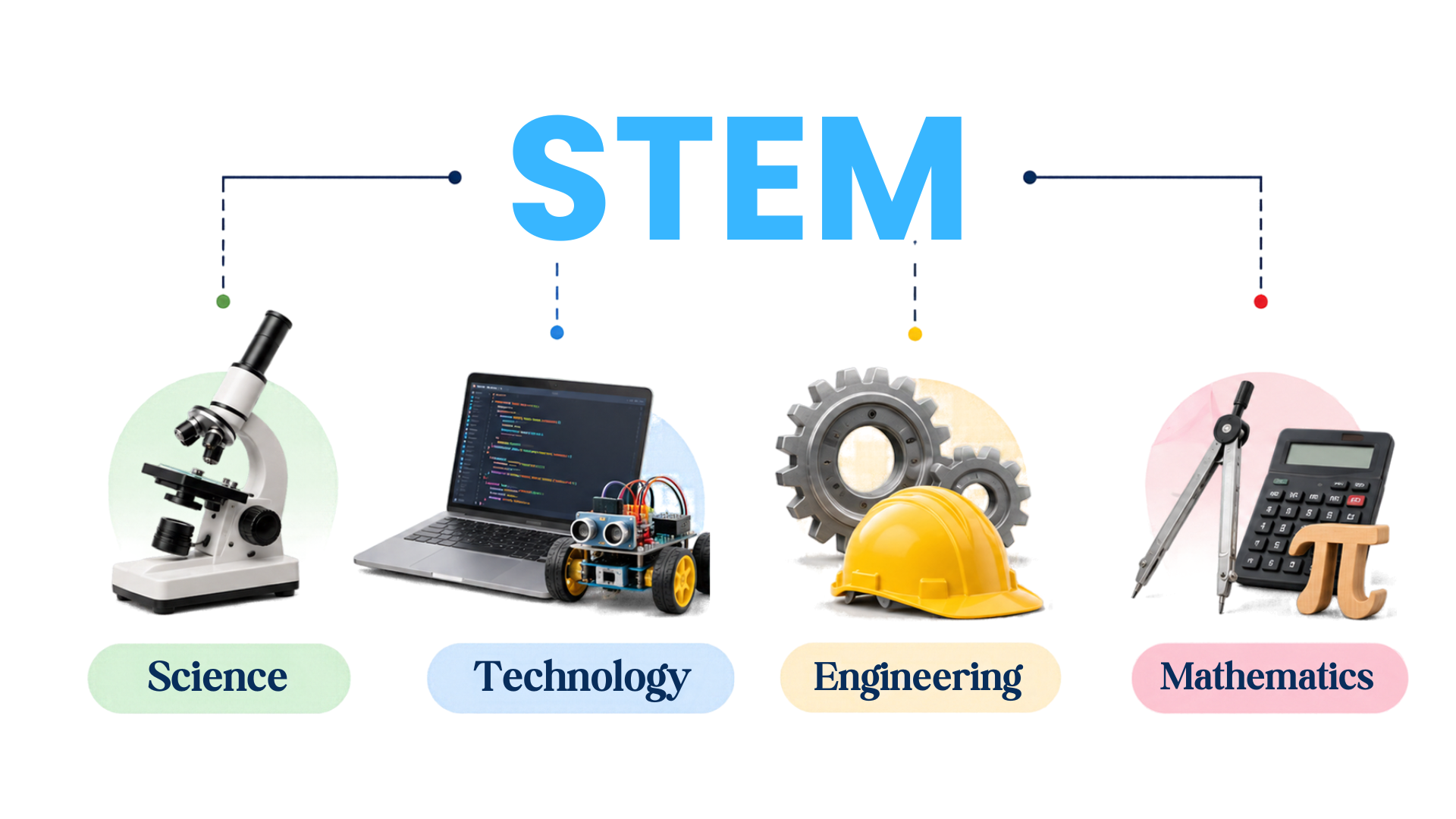
AI and robotics workshops complement STEM education by connecting science, technology, engineering and mathematics with real-world applications. Students can explore robotics projects or experiment with basic coding activities to understand how different subjects work together.
5. Builds Collaboration and Communication Skills
Group activities and project-based learning encourage students to exchange ideas, discuss challenges, divide responsibilities and present their solutions. Whether they are working on an AI-based project or participating in a group innovation challenge, these experiences help strengthen teamwork and confidence.
6. Prepares Students for Future Career Opportunities
Early exposure to artificial intelligence helps students become familiar with emerging technologies and potential career pathways. Developing future-ready skills can help them adapt to changing academic and professional environments.
How Do AI Workshops Encourage Practical Learning?
The effectiveness of AI education depends on how students experience it. Well-designed AI bootcamps combine demonstrations, guided activities, collaborative challenges and practical projects.
For example, students may explore how AI recognises patterns through image recognition activities or understand how automation can address everyday challenges through guided simulations.
Schools can also integrate robotics workshops, coding activities and innovation challenges to make technology education more engaging.
Importantly, AI education should also cover responsible technology use, privacy, fairness and the limitations of AI systems.
Why Should Schools Invest in AI and STEM Education?
Introducing AI bootcamps and workshops is an opportunity for schools to strengthen their existing technology education programmes. These initiatives complement classroom teaching, encourage experiential learning and also gives students opportunities to explore emerging technologies.
By partnering with experienced technology education providers like codevidhya and future gurukuls , schools can introduce structured AI learning programmes, teacher support and practical STEM activities aligned with their educational objectives.
Conclusion
The future of education requires more than familiarity with technology; it requires the ability to understand, question and apply it. AI bootcamps and workshops for schools can help students develop essential digital competencies, creativity, critical thinking and problem-solving skills.
By making artificial intelligence education a part of school learning, institutions can create more engaging learning experiences and help students become responsible, confident participants in an increasingly technology-driven world.
Frequently Asked Questions
- What are AI bootcamps for schools?
Answer. AI bootcamps are structured learning programmes that introduce students to artificial intelligence through guided lessons and practical projects.
- What are the benefits of AI workshops for students?
Answer.AI workshops help students develop AI literacy, critical thinking, creativity, problem-solving, collaboration and digital skills through hands-on learning.
- At what age can students start learning AI?
Answer.Students can begin exploring age-appropriate AI concepts during primary school. Activities and learning complexity should be adapted to their grade levels and understanding.
- Do students need coding experience to attend AI workshops?
Answer.No. Many introductory AI workshops use visual tools, demonstrations and guided activities that do not require prior coding knowledge.
- How can schools introduce AI education into their curriculum?
Answer.Schools can introduce AI through dedicated workshops, STEM programmes, project-based learning, robotics activities and teacher training initiatives.