



This is where incubation comes in.
Innovation is no longer limited to scientists or established entrepreneurs. School students can also identify real-world problems and develop creative solutions. Incubation provides the support system that helps young innovators transform their ideas into meaningful projects.
Table of Contents
What Is Incubation?
Incubation is a structured process that helps individuals develop innovative ideas into practical solutions, products or potential businesses. It provides access to mentorship, technical resources, infrastructure and professional guidance.
An incubation centre creates an environment where students can experiment, test their ideas and improve their concepts.
Some key benefits of incubation include:
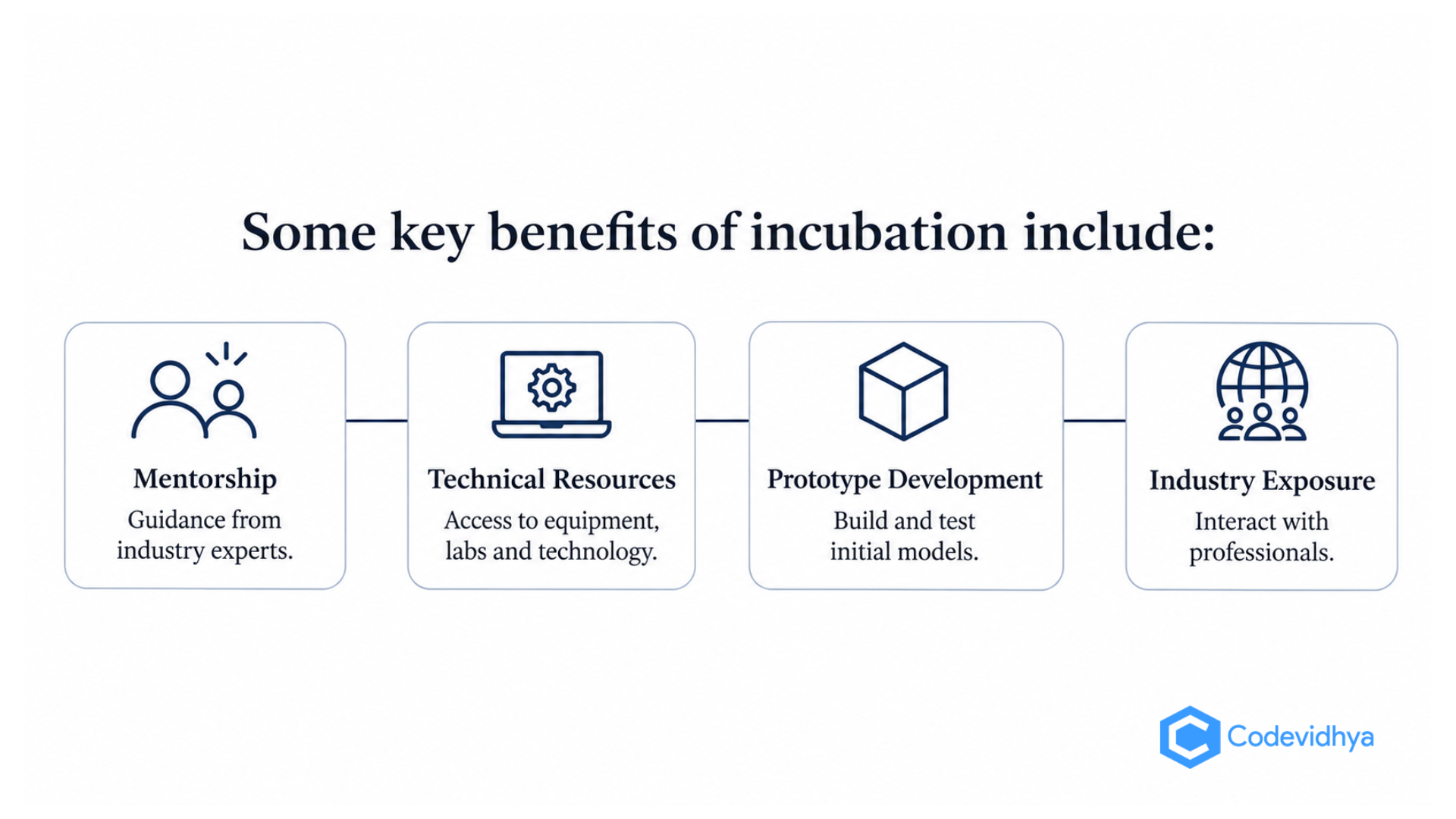
- Mentorship: Guidance from experienced professionals and industry experts.
- Technical resources: Access to equipment, laboratories and technology.
- Prototype development: Opportunities to build and test initial models.
- Industry exposure: Interaction with professionals and innovation networks.
In simple terms, incubation gives an idea the resources and support it needs to grow.
Why Is Incubation Important for School
Schools are often where curiosity begins. Students learn new concepts, explore their interests and develop an understanding of the world around them. Incubation helps them take this learning beyond textbooks and apply it to real-world challenges.
1. Encourages Creative Thinking
Students encounter problems every day, whether related to environmental sustainability or everyday convenience. Incubation encourages them to observe their surroundings, ask questions and think of possible solutions.
For instance, a student interested in water conservation might develop an idea for a smart water-monitoring system. With the right guidance, this concept could progress into an initial prototype.
2. Turns Ideas into Practical Solutions
Having an idea and developing a working solution are two different things. Students may know what problem they want to solve but need technical knowledge and resources to develop their concepts.
Incubation provides opportunities to experiment, build models and test different approaches. Students can explore robotics projects or technology-based applications while learning how to improve their initial designs.
3. Provides Expert Mentorship
Young innovators may not always know how to evaluate their ideas or overcome technical challenges.
Through incubation, students can receive guidance from experienced mentors who help them refine concepts, understand practical limitations and explore alternative approaches.
This exposure also helps students develop confidence in presenting their ideas and accepting constructive feedback.
4. Develops Problem-Solving Skills
Innovation involves understanding a problem, analysing possible solutions and identifying what works best.
Through experimentation and feedback, students develop essential abilities such as:
- Critical thinking and analytical reasoning.
- Creativity and independent decision-making.
- Teamwork and communication.
- Adaptability and resilience.
These skills contribute to students’ overall academic and personal development.
5. Introduces Students to Entrepreneurship
Entrepreneurship is about identifying opportunities and creating solutions that provide value.
Incubation introduces students to this mindset by helping them understand market needs, resource management and product development.
They begin to explore how an idea can address a genuine problem and potentially develop into a sustainable venture.
From Ideathon to Incubation: Taking Student Ideas Further
An ideathon provides students with a platform to identify real-world problems, brainstorm solutions, collaborate with peers and present their ideas before mentors or judges.
However, innovation does not have to end when the competition concludes.
This is where incubation becomes particularly valuable. While an ideathon encourages students to develop and present initial concepts, incubation provides an opportunity to take promising ideas further through mentorship, experimentation and prototype development.
A great example is the MIIC and Codevidhya Ideathon initiative, which offers students an opportunity to showcase their innovative ideas and receive incubation support to develop them further.
The initiative highlights how school-level innovation can move beyond competitions and create opportunities for practical learning.
To understand how ideathons help students develop essential skills,
Also Read|What Is an Ideathon? How It Builds Real Skills in Students.
An ideathon can introduce students to innovation, while incubation can help promising ideas progress towards practical solutions.
How Can School Students Get Started?
Students do not need advanced technical knowledge or a fully developed business idea to begin their innovation journey.
They can start by following these steps:
- Identify a problem: Observe challenges in their school or community.
- Develop an idea: Brainstorm creative and practical solutions.
- Participate in ideathons: Present concepts and collaborate with other students.
- Explore incubation: Seek mentorship and opportunities to develop promising ideas.
The most important step is to remain curious and willing to experiment.
Conclusion
Innovation does not begin at a particular age. A school student who identifies a problem, questions existing solutions and develops a creative alternative is already taking the first steps towards becoming an innovator.
Incubation helps nurture this potential by providing the guidance, resources and opportunities required to develop ideas further.
Through initiatives such as the MIIC and Codevidya Ideathon, students can explore innovation beyond textbooks and gain exposure to developing real-world solutions.
Frequently Asked Questions
- How can a school student get their idea incubated?
Answer. Students can participate in ideathons or innovation competitions where selected ideas may receive incubation support and expert guidance.
- Can students receive incubation support through ideathons?
Answer.Yes! Promising ideas presented during ideathons may be selected for further development through mentorship and prototype-building support.
- What should students do before participating in an ideathon?
Answer.Students should identify a real-world problem and develop a creative solution that they can explain through a presentation.
- Why should school students participate in innovation events?
Answer.Innovation events encourage students to think creatively, solve real-world problems and gain confidence in presenting their ideas.